On this page
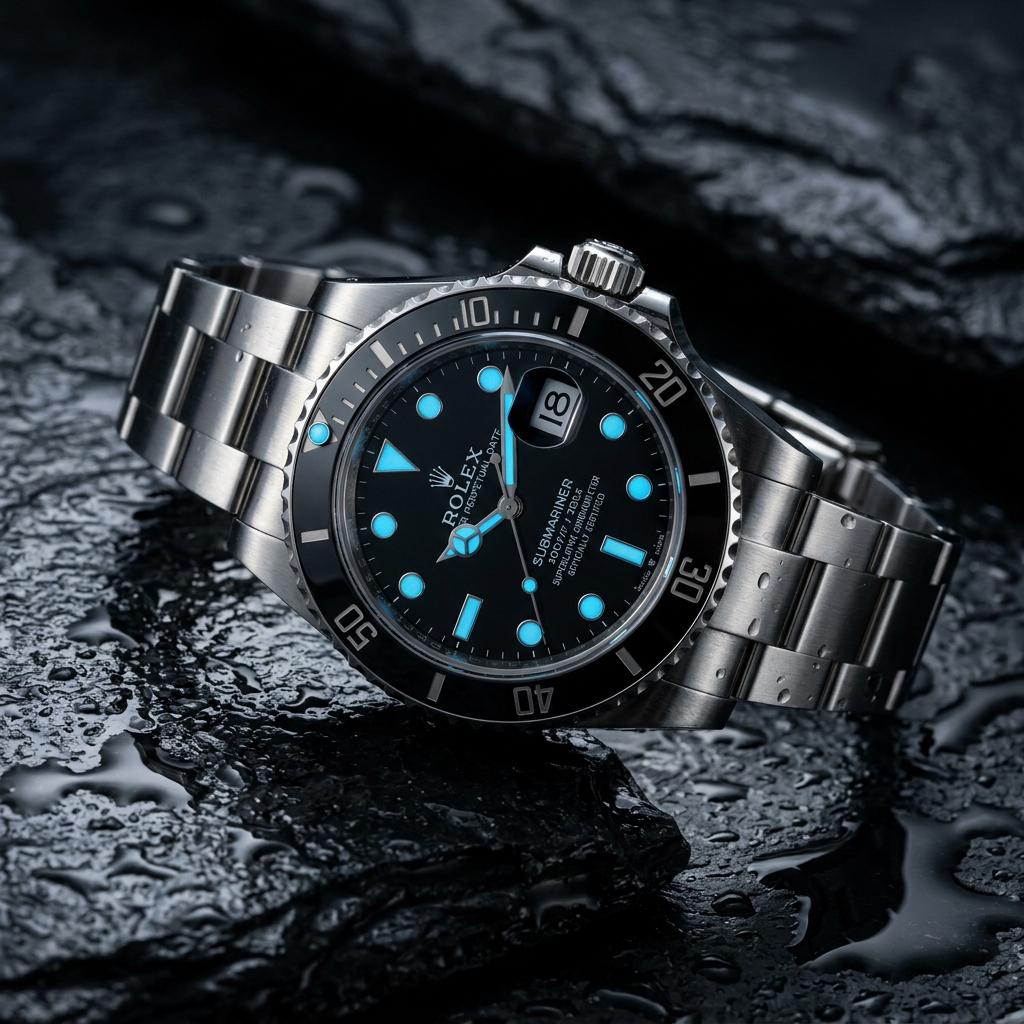
If you ask anyone to draw a dive watch, they will likely draw a Rolex Submariner. Debuting in 1953 as the first wristwatches waterproof to 100 meters, it pioneered the unidirectional timing bezel and the high-contrast dial. Here is the story of how an essential diving tool became the ultimate daily sports watch.
Born for the Deep
Rolex pioneered waterproof cases in 1926 with the Oyster. In the early 1950s, Rolex director René-Paul Jeanneret (an amateur diver) pushed to create a dedicated diving watch. Working with diving pioneer Jacques-Yves Cousteau, Rolex developed the Submariner, featuring a rotating bezel to track elapsed dive time and high-visibility luminescent markers.
From Military Duty to James Bond
The Submariner’s rugged reliability attracted military forces, notably the British Royal Navy, which commissioned modified versions known as "MilSubs". In popular culture, the watch gained legendary status on the wrist of Sean Connery as James Bond in early 007 films, proving it could wear just as well with a tuxedo as a wetsuit.
Engineering Refinements
Over the decades, the Submariner evolved. Water resistance increased to 300 meters, the aluminum bezel insert was replaced with scratchproof Cerachrom ceramic, and case dimensions grew to 41mm. Inside sits the Calibre 3230 (or 3235 with date), featuring Rolex’s high-efficiency Chronergy escapement.
The Modern Daily Wearer
The Submariner’s appeal lies in its versatility. It is tough enough for diving and refined enough for formalwear. For a deeper look, check out our independent Rolex Submariner review.
Specifications
| Case Diameter | 41 mm |
|---|---|
| Material | Oystersteel (904L steel) |
| Water Resistance | 300 m |
| Movement | Calibre 3230 / 3235 (Automatic) |
| Bezel | Unidirectional, Cerachrom insert |
Frequently Asked Questions
When did the Rolex Submariner debut?
The Submariner was introduced to the public at the Baselworld watch fair in 1954, following its development in 1953.
What is the difference between Submariner and Submariner Date?
The classic Submariner (sometimes called "No-Date") has a symmetrical dial without a date window, while the Submariner Date includes a date complication at 3 o’clock with a magnifying "Cyclops" lens.
Is Oystersteel different from regular steel?
Yes. Rolex uses 904L stainless steel, branded as Oystersteel, which is highly resistant to corrosion and takes a exceptional polish compared to standard 316L steel.
Reviews Editor
Sofia Marchetti
Reviews editor focused on dive watches, chronographs and everyday wearability.